
How India's PLI Scheme Is Transforming Electronics Manufacturing and Attracting Global Giants Like Apple

Ananya Verma
Content CreatorIndia's ambitious Production Linked Incentive (PLI) scheme represents one of the most significant policy interventions in the country's manufacturing sector in recent decades. Launched in 2020 as part of the "Atmanirbhar Bharat" (Self-Reliant India) initiative, the PLI scheme has already catalyzed unprecedented growth in electronics manufacturing and is reshaping India's position in global supply chains.
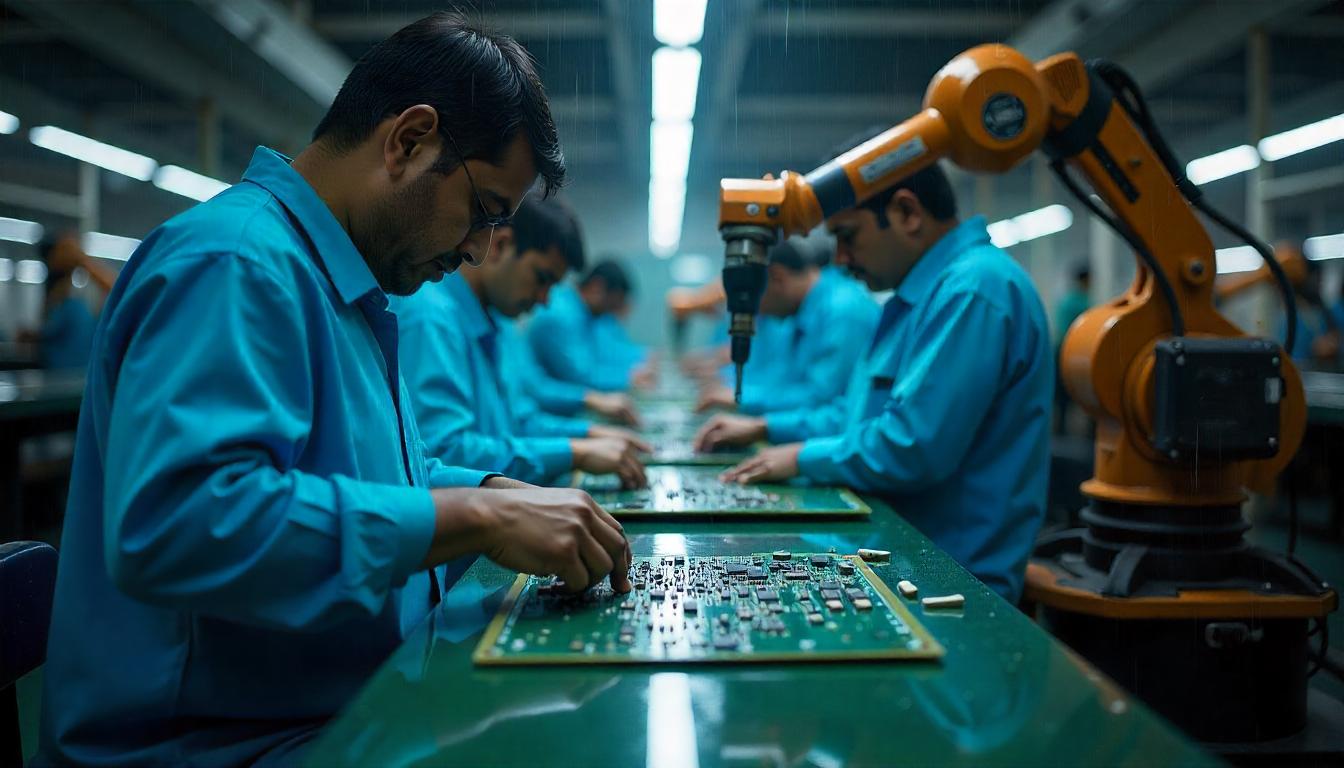
India's PLI Scheme: Transforming Electronics Manufacturing & Apple Production
The PLI scheme for electronics manufacturing offers financial incentives of 4-6% on incremental sales over base year for a period of five years, representing a paradigm shift from the traditional subsidy-based approach to a performance-linked model that rewards production excellence.
Key Components of India's Electronics PLI Scheme
The electronics manufacturing PLI scheme, with a total outlay of ₹40,951 crore (approximately $5.5 billion), focuses on three critical segments:
- Mobile Phone Manufacturing and Specified Electronic Components: Allocated ₹40,951 crore
- IT Hardware: Allocated ₹7,350 crore
- White Goods (AC and LED): Allocated ₹6,238 crore
The scheme strategically targets both domestic champions and global leaders through differentiated incentive structures:
- Mobile Phone Manufacturing: 4-6% incentive on incremental sales
- Electronic Components: 5% incentive on incremental sales
- Specific Sub-Assemblies: Incentives up to 6% based on domestic value addition targets
Apple's Manufacturing Journey in India: The PLI Effect
Perhaps the most significant testament to the PLI scheme's success is Apple's rapidly expanding manufacturing footprint in India. Once primarily dependent on China for production, Apple has dramatically accelerated its manufacturing shift to India since the PLI scheme's introduction.
Apple's India Manufacturing Timeline
| Year | Milestone | Impact |
|---|---|---|
| 2017 | Initial iPhone SE assembly begins in Bengaluru | Limited production, testing phase |
| 2020 | PLI scheme announced | Strategic shift accelerates |
| 2021 | iPhone 12 production begins | First current-generation model produced |
| 2022 | iPhone 14 production starts within weeks of global launch | Near-simultaneous production capability demonstrated |
| 2023 | iPhone 15 production begins simultaneously with global launch | $7 billion worth of iPhones exported from India |
| 2024 | MacBook production begins in Tamil Nadu | Diversification beyond smartphones |
| 2025 | Projected 25% of all iPhones to be manufactured in India | Major supply chain shift from China |
Apple's contract manufacturers – Foxconn, Wistron (now acquired by Tata), and Pegatron – have collectively invested over $2.5 billion in Indian manufacturing facilities, creating more than 100,000 direct jobs, largely driven by PLI incentives.
PLI Scheme's Impact on India's Electronics Manufacturing Ecosystem
The electronics PLI scheme has triggered a virtuous cycle of investment, with several notable outcomes:
Job Creation and Skill Development
- Over 200,000 direct jobs created in electronics manufacturing
- Additional 600,000 indirect jobs throughout the supply chain
- Enhanced skill development programs for manufacturing workforce
Export Growth
- Electronics exports grew from $10.6 billion in FY2020-21 to $20 billion in FY2023-24
- Mobile phone exports increased by 300% since PLI implementation
- India transformed from net importer to exporter of smartphones
Domestic Value Addition
- Component ecosystem developing around major manufacturers
- Domestic value addition in smartphones increased from 15-20% to 35-40%
- Local sourcing of components like batteries, chargers, and mechanical parts expanding
Investment Attraction
- Total investments in electronics manufacturing exceeding $20 billion since PLI launch
- Foreign Direct Investment (FDI) in electronics sector increased by 55% annually
- Domestic companies expanded manufacturing capabilities significantly
Beyond Apple: Other Global Giants Leveraging India's PLI Scheme
While Apple's manufacturing shift captures headlines, numerous other global electronics giants have embraced India's PLI scheme:
- Samsung: Expanded its Noida facility to become one of the world's largest mobile manufacturing units
- Dell, HP, and Lenovo: Commenced laptop and tablet manufacturing under IT hardware PLI
- Daikin and Hitachi: Established manufacturing for air conditioners and components
- Dixon Technologies: Emerged as India's largest homegrown electronics manufacturer
- Flex Ltd: Expanded manufacturing capabilities for various electronic components
Challenges and Future Roadmap for India's Electronics Manufacturing
Despite impressive progress, several challenges remain:
Supply Chain Development
The development of a robust component ecosystem remains a work in progress. While final assembly has gained significant momentum, deeper manufacturing capabilities for components like semiconductor chips, display panels, and printed circuit boards need further development.
Infrastructure and Logistics
Manufacturing clusters require improved connectivity, reliable power supply, and efficient logistics networks. The government has initiated dedicated freight corridors and manufacturing zones to address these challenges.
Skill Development Pipeline
The rapid expansion of manufacturing facilities demands a continuous pipeline of skilled workers. Industry-academia partnerships and specialized training programs are being developed to meet this growing demand.
The Road Ahead: PLI 2.0 and Beyond
Building on the success of the initial PLI scheme, the government has indicated plans for an enhanced "PLI 2.0" focused on:
- Deeper Component Manufacturing: Specialized incentives for critical components
- Design-Led Manufacturing: Emphasis on intellectual property development in India
- R&D Ecosystem Development: Incentives for establishing research centers
- Semiconductor Manufacturing: Dedicated PLI scheme with $10 billion outlay
Conclusion: India's Emergence as a Global Electronics Manufacturing Hub
India's PLI scheme represents a strategic inflection point in the country's manufacturing journey. By shifting from subsidy-based incentives to production-linked rewards, India has successfully attracted global electronics giants like Apple while nurturing domestic champions.
As global corporations increasingly adopt China+1 strategies to diversify supply chains, India's combination of policy support, large domestic market, and skilled workforce positions it ideally to become a major electronics manufacturing hub. The PLI scheme has not only accelerated this transition but fundamentally altered the trajectory of India's electronics manufacturing sector.
With continued focus on addressing remaining challenges and building on early successes, India is well-positioned to capture a significant share of the global electronics manufacturing value chain in the coming decade.